Newly-added Games
Showing posts with label 3DS. Show all posts

Review: Yoshi's New Island (3DS)


Yoshi's New Island (3DS)

Game Rating
User Ratings: 63
Our Review: Scroll Down

Back in 1995, Yoshi's Island turned heads when it was announced as the successor to the masterful Super Mario World. Appearing to be more of a spin-off than a direct sequel, there was skepticism as to whether such a departure could live up to the Mario name and please fans of the series. Fortunately the unique gameplay mechanics, breathtaking art style, and imaginative cast of characters came together to offer an unforgettable experience absolutely bursting at the seams with creativity and impeccable craftsmanship. Now, nearly 20 years and one sequel later, comes Yoshi's New Island. Can it expand upon the wonderful ideas established by its predecessors?

Unsurprisingly, the storyline that sets our characters forth on their adventure is simplistic — a norm for Nintendo platformers; in fact, the setup in this outing is nearly identical to that of the original Yoshi's Island. As a stork is delivering Baby Mario and Baby Luigi to their parents, Baby Luigi gets intercepted by Kamek; in the commotion Baby Mario is knocked loose, sending him tumbling down to a mysterious island. This of course is Yoshi's New Island. From here, the Yoshi clan assists Baby Mario in searching for his captured bro.
Anyone familiar with either previous game in the series will immediately have a grasp of the controls, as they haven't changed a bit. Yoshi's distinct repertoire of moves is intact, and you should be flutter jumping, egg throwing, butt stomping, and babysitting like a pro within minutes. If you find that the initial mapping of the buttons is off-putting, accessing the options and switching to "B-Style" controls should settle you right into your comfort zone. Also, we found the D-Pad to offer much more reliable movement than the analogue stick.

Doing away with the baby-switching element and dual-screen-spanning view introduced in Yoshi's Island DS, Yoshi's New Island sticks to the formula established in the SNES original. The basic goal is for Yoshi to safely transport his baby companion from the start to finish of each stage, but you'll also be scored according to the percentage of items gathered. Twenty red coins will be disguising themselves as standard coins, five smiley flowers are tucked away in devious places, and retaining thirty stars when finishing a stage all contribute to a completion rating. This is where the real challenge lies, though it's not always for the right reasons — questionable item positioning being the main culprit.
The levels are more streamlined than ever before, lacking the intricate design of past instalments. While there are still plenty of hidden pathways and out-of-reach platforms, their presence is not only noticeably scaled back, but they're not as expertly placed as they could have been. Coming across any challenging platforming segments is also quite rare, and when a complication does arise it feels like the result of claustrophobic/narrow corridors too clogged with environmental obstructions and/or enemies; navigating these sections is clumsy and can prove quite frustrating. Granted, these aren't extremely common scenarios, but the level design overall evokes little wonder and is often average at best.

For younger gamers the straightforward design should ensure that finding their way to the goal shouldn't be too daunting of a task. Although, getting familiar with the game mechanics — which are slightly more complex than, let's say, a Mario game — may require a little practice. If pools of lava and bottomless pits start eating up lives, a Warp Pipe will present itself to propose Flutter Wings to the player. These will allow for consistent, horizontal fluttering to lend a hand when the going gets tough — the game will penalize you for using them by marking the stage unfinished, even though you're allowed to advance.
Other new additions, although sparsely used, come in the form of Eggdozers and Yoshi Stars. When Yoshi consumes an extra-large Shy Guy he produces one of these Eggdozers, which can then be used to crumble barriers interfering with progression or allow Yoshi to walk around underwater by weighing him down. The Yoshi Star, on the other hand, grants invincibility, allowing Yoshi to blast through enemies, run on walls/ceilings, and in a couple of situations even rocket through the air like Superman. These are all nice additions, but since they can never be used outside of contained situations we were left wanting more.

The same goes for Yoshi's transformation abilities. As advertised, you'll have the opportunity to morph into six vehicles, such as a minecart, submarine, hot-air balloon, jackhammer, bobsled, and helicopter. These sections remove you from the level, briefly, akin to participating in a minigame. Each one adopts use of the gyroscopic controls, and requires tilting the 3DS to the left or right to move while utilizing a single button to jump or come to a stop, depending on the transformation. For the most part they all play and handle identically, foregoing exploration and depth to ensure accessibility.
Some of the most impressive moments from the original Yoshi's Island came in the form of the memorable boss battles that popped up twice in each world – stages 4 and 8, respectively. To this day we still reminisce about driving stumps into Raphael the Raven while orbiting a moon and ricocheting eggs around the inside of Prince Froggy's belly. While Yoshi's New Island has a couple of promising ideas involving shooting switches to flip panels and reacting to the environment in interesting ways, the bosses mostly feel shallow, simple, and uninspired, often ending before they really begin.

There are six worlds in total, each comprised of eight levels – completionists will find more to be discovered. Being very thorough, but not replaying levels if we didn't earn a 100% rating, it took us about 10 hours to complete a playthrough. If you're the type of gamer that isn't interested in investigating every corner of the game to collect all items, the adventure may be quite a bit shorter. As long as you don't expect to marathon through the island, it should be said that there's a solid amount of content here.
In addition you can unlock six download-play minigames as you progress through single player; we imagine these won't entertain for long due to their cooperative nature conflicting with the lack of a score to chase. For example, Enemy Eat-Off will find you and a partner devouring as many enemies as possible before time runs out, where Ground-Pound Pop will have you both maniacally popping balloons with your bums. There is no set number of enemies to eat or balloons to pop, nor are there leaderboards to provide players with a clear goal, so the motivation to keep playing isn't really there — unless you're simply looking to goof off and kill time. It's merely fluff.

That brings us to the lingering elephant / dinosaur in the room – the controversial art style. Contrary to what a static image might suggest, the visuals aren't all that rough on the eyes. We're happy to report that the stereoscopic 3D has been smoothed out since our initial hands-on with the game back in June last year, and its subtle presence mostly limits the depth to only two layers — background and foreground. That's not to say that the overall art style isn't a bit sterile when compared to the stunning hand-drawn look of previous Yoshi's Island titles, because it is. Levels blur from one to the next, and the difference between the first few worlds feels more like a swap in colour palettes than a full shift in theme. Environments appear under-decorated and lack the same level of personality, charm, and attention to detail we've come to expect from the series.
And that sentiment could blanket how we feel about the entire experience. It's watered-down, occasionally providing a good time but almost never impressing. There might be a couple of minor noteworthy inclusions and changes that compliment the established form, though none of these are substantial enough to take things to the next level or shake things up. In the end you'll feel like you've been there, done that, and the important point is that it was much better the first time around. Kids or inexperienced gamers may extract the most satisfaction due to the simplified design, but those well-versed in all things Yoshi will likely be disappointed.

Conclusion

The biggest problem with Yoshi's New Island is that it feels stripped of the style, substance, and ingenuity that once made the series such treasured property. By watering down the game design and failing to incorporate new ideas that enhance the established mechanics in any meaningful way, you're left with an egg that's not necessarily bad, just dull and unimpressive. It's completely functional and could serve as filler while waiting for the next big 3DS or Wii U release, but there's little denying that it's an underwhelming outing for Yoshi.

Fantasy Life

Fantasy Life, Level-5 and Brownie Brown's life sim and action RPG, is a game with a long and storied history. Originally announced in Japan for the Nintendo DS/DSi generation of consoles back in 2009, it spent three years in development, seeing a platform upgrade to the Nintendo 3DS, finally releasing in Japan-only on 27th December, 2012.
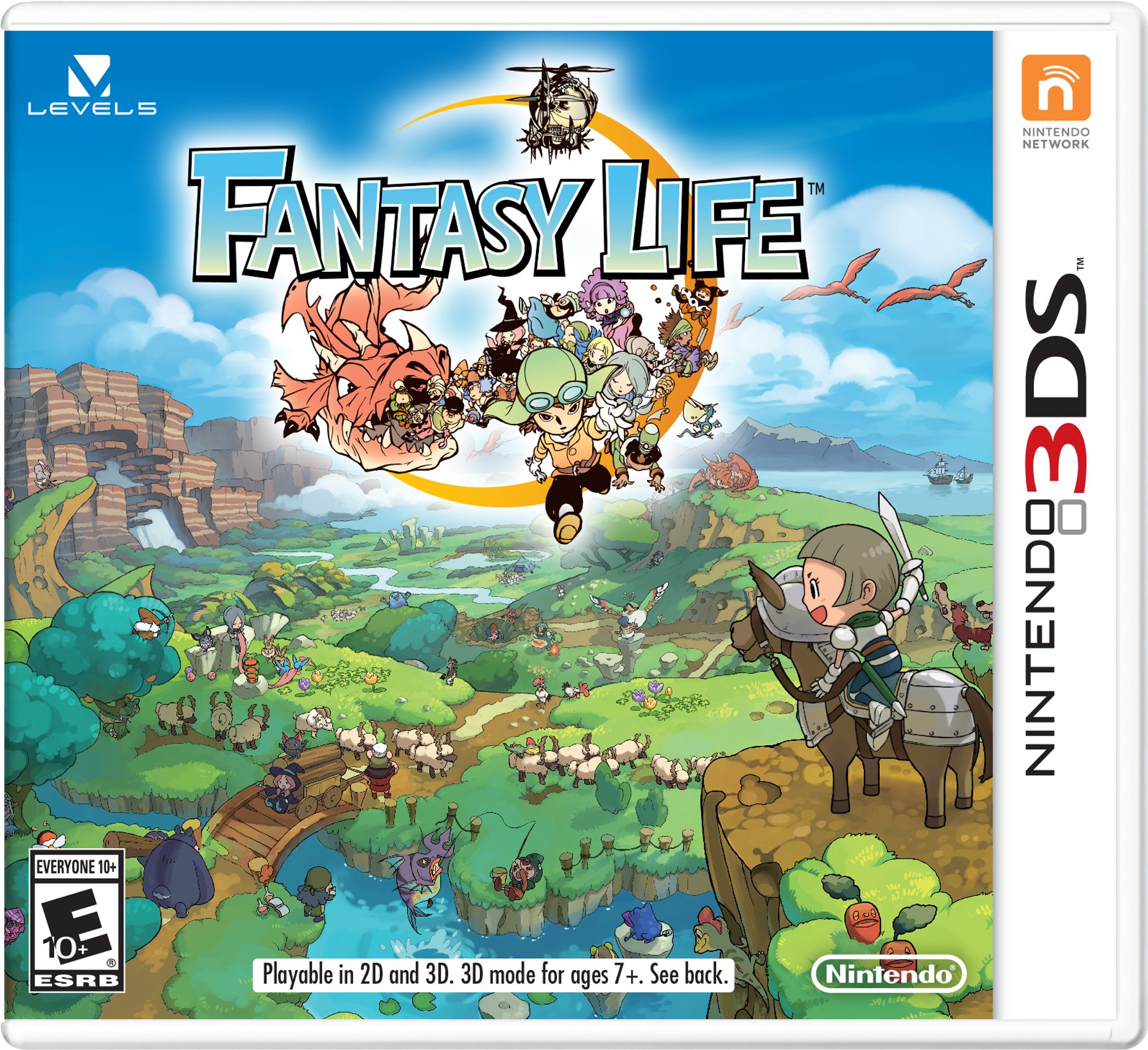
Fantasy Life was closely watched by the western gaming press as the companies and staff involved in its production reads like a who's who of Japanese games industry RPG notables. In addition to Level-5, legendary character artist Yoshitaka Amano and early Final Fantasy composer Nobuo Uematsu are also credited on Fantasy Life. Most notably, Fantasy Life is the final game developed by Brownie Brown — before a restructuring and name change to 1-UP Studios — a company that holds a special place in JRPG fans' hearts for, among other things, its involvement with Mother 3, a game that was never officially released in the West. Now that Fantasy Life is finally arriving on western shores, does it deliver on the promise of its formidable creative staff? Absolutely.

At first blush the action RPG elements of Fantasy Life seem almost par for the course — the medieval fantasy setting, a dragon threatening the land, a race of cuddly creatures called the Plushies who haven't yet grasped that their name doesn't form the basis of the Queen's English; but the game excels by expanding the scope of the adventurer's journey by integrating it with the game's life sim features. In addition to gaining XP and earning Dosh (the in-game currency) for littering the landscape with creature corpses, each Life has its own series of challenges which award stars.
When enough stars are earned, the player ranks up in the Life they are currently living and gains access to new skills or recipes that also mostly remain usable when a character switches Lives, with one exception. Special Skills, unusually powerful or useful techniques, can only be used as part of the character's current Life. While the game certainly supports focusing exclusively on picking up a sword and going to town on the local wildlife or just hanging around the city selling handmade furniture, the full experience of Fantasy Life lies in developing a well-rounded character that can craft his or her own armour and weapons, potions, stat-boosting foods, and more.

All of this may sound like you're building a personal mobile weapons platform that can knit its own ammunition during recoil phases, but the game's difficulty is handled surprisingly well. You won't find yourself switching Lives and single-shot killing everything in sight, and the monsters of new kingdoms feel appropriately challenging once the areas become available. Combat is centred around using special button presses to execute certain moves, requiring a bit of timing to master but certainly not especially difficult, even to action RPG newcomers.
Fantasy Life isn't a game of statistics, gear dependence, and power grubbing, and this is evident in its somewhat eccentric user interface. While the screens are beautifully laid out and clean, this forces some useful information off of the top-level screens. It takes a few button presses to check out an item's statistics, and while shopping there's no immediately visible comparison between currently equipped gear and the selected item in the shop, again taking a few button presses to access. Fantasy Life is obviously not a title for people in a hurry.

Several of Fantasy Life's Lives involve producing goods, such as armour, clothing, and furniture by means of a short minigame. The crafting process is straightforward, requiring changing your character's position at the workbench and then performing the related task at that station in time with the indicator using the A button, and activating special skills once available. The difficulty is noticeable but not punishingly so — it's possible to miss a few taps or launch your character to the wrong place at the workbench and still make the item in the allotted time. Should you fail, your crafting materials will not be consumed, leaving you free to try again with no penalty; another example of design generous to less experienced players.
In addition to XP for character level gains and and stars for Life ranks, there's a third system, called Bliss, that awards points for other life sim related tasks like exploration, making in-game allies and decorating or buying new homes. As you increase your Bliss, you are awarded things like bigger bags, the ability to utilize mounts from different kingdoms and enhanced shopping experiences. Bliss is administered by Flutter, a talking butterfly that becomes your constant companion and neck piece early on in the game.

Fantasy Life's art is superb, with a beautifully colourful palette and cartoony, stylised graphics that are just unrealistic enough to avoid looking ridiculous; the 3D effect works consistently and adds even more richness to the already pleasing graphics. Unfortunately, it does suffer from some minor visual issues. The perspective, which is midway between a top-down and a side view — combined with the relatively low resolution of the 3DS — means that details get somewhat crunched to fit the available pixels or lost entirely, an issue which mostly affects in-game characters — the environment art is consistently fantastic. There was some obvious slowdown in the main cities at times, but this didn't occur frequently enough to be a major concern while playing. If you're looking for pure graphical heft Fantasy Life won't satisfy, but the art definitely supports and enhances the game world's presentation.
Brownie Brown has created a game world suitable for all ages, but mature enough in its presentation that it won't turn off the legal-to-drive crowd. The game's main story addresses themes of acceptance and cooperation in a way that any pro-social parent would be proud to hector their children with. The in-game cinematics that advance the main story, of which there are sadly few, are every bit as delightful as what we've already seen in the game's many trailers, and the 3D effect makes them feel that much more vivid. The music also supports Fantasy Life's light-hearted and humorous tone, but it's not all kazoos and glockenspiels — the bell and violin theme that plays in Castele's city at night is simply and gorgeously haunting.

It should also be noted, though its level of attraction will vary, that this isn't an exclusively single-player adventure. Fantasy Life's multiplayer allows players to get together locally or online in groups of up to three and accomplish the same tasks and challenges as in single-player mode (although it is not possible to advance the main story in multiplayer). With the variety of Lives to live and the range of tasks to perform, any trip to any kingdom with just about anyone is sure to be productive in some way — and you might just get the right help to finally defeat that challenge monster that's spent far too long in your Life list.
Link mode also allows you to send your online friends messages (both group-wide and private), notifications and applause without actually playing together. The onscreen keyboard is alphabetical and not QWERTY, so expect a learning curve when trying to stylus- or fingernail-tap out a message. Using StreetPass, tagged players' Fantasy Life avatars can appear as residents in your main town of Castele; speak with them enough to become friends and eventually they may reward you with gifts. These are welcome touches that will add a great deal to the experience for some, or at the very least offer a fun diversion.

Conclusion

Given the game's relative age, Fantasy Life isn't going to be the shiniest toy on the 3DS' shelf this year, but it just may be the happiest. Providing quality gameplay in both its life sim and action RPG aspects, served up with all of the colourful wit and charm anyone could ask for, it serves as a jewel in the crown of memory of a games studio that helped create some of the most memorable role-playing video games that ever graced the medium. It may now be 1-UP Studios, but Brownie Brown hit its marks with Level 5 in this game. As a farewell for the company in its old guise this is an excellent game for the occasion. So long Brownie Brown, and thanks for all the fun.

LEGO Star Wars III: The Clone Wars (3DS)

Back in 2005, if you would have told someone that six years down the road, LEGO Star Wars would still be one of the most bankable and consistently enjoyable franchise would have been laughed at. Many called the idea a shallow cash grab, yet here we are in 2011 with another instalment in the hugely popular series.
Before the Wii fully tapped into the casual gaming crowd, the idea of making any game (other than maybe Mario Party) primarily for a family audience was still not widely considered to be a wise or potentially profitable business plan.

But LEGO Star Wars wasn't a lazy cash-in. It was an incredibly fun and whimsical action-platformer whose unique sense of humor and charm captivated everyone from LEGO-loving kids to old-school Star Wars fans who had grown disillusioned with the recent, melodramatic prequels.
Things are a little different now.
Not much has changed in the ol' LEGO formula since the first game came out, and if you've enjoyed previous entries in the series, there's little reason to suspect you wouldn't enjoy LEGO Star Wars III: The Clone Wars as well. Sadly, some surprising omissions, a few gameplay issues and technical problems make it the closest the series has come to that first feared lazy cash grab.
Of course the tricky thing right off the bat is that of all sagas in the Star Wars universe, the Clone Wars is by far the least familiar, mostly because it's so new and primarily relegated to an animated television series. As a result, the nostalgia/familiarity factor is lost almost immediately for the Average Joe. This isn't a problem while playing the levels themselves, but the cutscenes and story sequences, all of which are silently acted, are more confusing than they ought to be.

It's a testament to the gameplay, then, that the title remains mostly enjoyable despite this. As in the other LEGO Star Wars games, you'll be gallivanting across various planets and galaxies while using a mixture of platforming, exploration and character-based puzzle-solving to pass each story level. Unlike some of the other entries in the series, The Clone Wars wisely focuses on these gameplay staples for the most part, rather than repetitious combat; in fact there are several clever instances where the combat is a puzzle in and of itself. It's also worth noting that although you'll still be using multiple characters to complete each level, the character-swapping mechanics have been significantly streamlined. Instead of having your entire party following you around at all times, there's now only ever one player on the screen, meaning you simply switch characters with the R and L triggers. The developers put this to fairly good use as well, as certain enemies require the participation of multiple party members in quick succession to be destroyed.
Your party members aren't just aesthetically different, however — as series vets know, every character has their own special ability that can be used to complete specific puzzles or grant them certain advantages in combat. Yoda, for example, as a short little guy can fit in small nooks and crannies that a larger character might not be able to access. The levels, which are some of the best the series has seen, have a certain amount of depth to them as well: you might see a ledge with a special object on it that you can't reach with your current party, for example, meaning you'll have to come back later with a different character or two to reach it. You see, for the uninitiated, LEGO Star Wars is quite reminiscent of the platformers of the N64/PS1 era in that it's very much about collecting things. Completionists are definitely going to get the most mileage out of this one, as all the collectables, combined with the branching level designs, give the player plenty of reasons to go back and visit the story missions multiple times.

If there's one thing that has really made the series popular, though, it's the great co-operative multiplayer, which is why it's such a shame that this game doesn't have any.
It's a pretty baffling omission, quite frankly. Even some of the DS iterations of the LEGO games, such as LEGO Indiana Jones, had a full fledged co-op mode. Given the 3DS's significantly greater horsepower, its omission is both strange and hugely disappointing. It doesn't do the minigames any favours either: these unlockable extras feel like little more than pointless distractions without a friend to play them with. The StreetPass feature doesn't make up for the loss at all, as all it does is grant you a few extra studs (the game's currency), though considering the number of these you need to unlock all the characters, every little helps.

Of course as you probably expected, most of the 3DS' extra power is used on the visuals, which are undeniably mesmerising. Whether you have the 3D turned on or off, LEGO Star Wars III is one great looking game, with incredible texture work, sharp lighting effects and beautiful environments. The 3D is, as expected, a double-edged sword — the frame rate takes a hit if you have it turned on, but it also adds a surprising amount of depth to the environments, and makes the otherwise jagged character models appear much smoother. It's not the best showcase of the system's graphical prowess on the launch lineup, but it's a visual treat nonetheless.
The one area that not even the 3D visuals can save, however, is the dogfight missions, which are just short of unbearable. They don't control well (even with the usually-excellent Circle Pad), they're a bummer to look at, and to top it off they're simply not fun. Mercifully, these missions are infrequent, and are usually backed up by a strong traditional mission-type or two.
During our play through the game froze on at least five occasions, and it doesn't appear to be at all related to the most recent 3DS update (which has been causing similar problems) as no error message occurs during freezing. There were also some instances during cutscenes where characters would just completely fail to animate. These issues don't seem to be affecting everyone's copy of the game, but having to replay a level three times simply because it keeps freezing on you is an inexcusable issue in any game, and a particularly shocking one from this typically well-polished series.

Conclusion

LEGO Star Wars III: The Clone Wars is a tough one to pin down. Its single player mode is just as fun as previous entries in the series, if not more so; its puzzles and level designs are wonderfully clever, if not particularly challenging, and new abilities like wall-jumping add even more variety to the already solid experience. Fans of exploration will have an even better time with the game, as there are numerous, tough-to-find collectables in each level. On the other hand, you're going to have to put up with some seriously mediocre flight missions, potentially game-ending bugs, and there's no multiplayer to speak of.
In a word: disappointing. What we have here is a fun game that, with a bit of polish and a few extra features could have been something truly special.

Inazuma Eleven GO: Light & Shadow (3DS)


In Japan, Level-5 is one of the masters at maximising franchises through games — typically on portable systems — and TV shows or films, continually keeping the storyline going and producing regular content. Yo-kai Watch is the current craze, while Professor Layton had some film content to accompany six main-series games and more spin-offs besides; then there's Inazuma Eleven, one of the company's most prolific franchises. Its route to the West has been long, however, with heavily delayed localisation and a Europe focus holding it back — North America only recently received a revamped 3DS version of the DS original.
It's a series with impressive lore, nevertheless, and Inazuma Eleven GO: Light & Shadow are the first entries (two titles largely the same, Pokémon-style) outside of Japan to bring the major side-series to Western attention — in Europe initially, once again. Right off the bat we'll say this: if you're a devotee of the first three main titles across DS and 3DS, this is a fun extension that should join your collection. For those coming in fresh, a lot of the nods, winks and background story may be a little baffling, albeit not enough to spoil the experience.
The storyline takes place — we think we've got this right — 10 years after the conclusion of Inazuma Eleven 3, and this time around you're controlling Arion Sherwind, who comes with the same DNA of over-the-top super-enthusiasm as the main protagonist of this title's predecessors, Mark Evans. He's just starting out at Raimon, the setting of the first DS title and recurring home of Evans, and joins the school team and a host of new characters. Initially we struggled to warm to Arion and his team-mates as much as those that came before, but the title does a good job of using its story-telling to flesh these players out; eventually we did have some level of affinity with these young footballers.
There are a host of returning characters, though, which we won't spoil here, which as mentioned above could fly over the heads of those jumping in for the first time. There's a bit of clunky reminiscence to remind you of what's come before, but overall the ensemble cast is introduced and expanded relatively skilfully. As for the overall storyline, it's got a neat hook and progresses nicely, though it does have padding that feels unnecessary; in fact, the amount of slightly inane busy-work that's thrown in on occasion is a regular complaint following on from Inazuma Eleven 3 — the development team wants this to be a substantial undertaking, but throws in unnecessary filler to achieve that goal.
This GO entry, meanwhile, scales back some of the daunting depth that spiralled out of control in the original trilogy, though perhaps chops away too much. The first title hit a sweet spot that this entry misses, as despite having equipment, abilities and levelling to tackle, it feels less substantial. Random 5-a-side football battles are exceptionally rare now, as you're instead simply shown challengers on the map that you can take on or completely ignore — it's welcome, compared to over-zealous equivalents that came before, but we found that the world felt less vibrant as a result. There are plenty of NPCs to exchange meaningless phrases with, yes, but for many hours we were running around the same dozen or so small-ish areas over and over again; this is a title setting the foundations for the whole GO series, yet it falls short of being compelling in its storytelling and sense of progress.

That said, there are new features and an attention to detail to admire. Though the overworld is more barren than before and items feel less relevant than ever, there's real depth to the action. The Extra Competition Route for additional matches returns — despite being annoyingly restrictive early on — but there are new ideas such as Twitter-style network where characters chat over events, and a neat trading card mechanic for acquiring new players. As with previous entries you can certainly get by with the default line-up and extras picked up in battles, but there's daunting scope to expand your roster, while local Wi-Fi trading is great for making deals with friends.
The primary feature of this title — beyond exploring the over-world and picking some local battles — is the story 'event' matches, which are 11-a-side and full of drama. It's in these where the now-standard wacky special moves come to the fore, and some scripting is combined with increasingly tough matches — we even had to endure a penalty shoot-out on one occasion. These are essential to the plot and progress well, gradually unveiling more abilities and evolving characters, all once again — as with the 5-a-side battles — controlled with the stylus on the touch screen, though conversations and special moves show on the top screen. It functions as before with a combination of taps and swipes, though this entry throws in some new mechanics; most notable are Fighting Spirits, which have their own energy requirements and involve rather large spirits beefing up key characters and, on occasion, clashing with each other.

It's to Level-5's credit that these matches remain a highlight, especially with some added drama thrown in with key events that disable the clock — you're tasked with getting a specific character into a certain area of the pitch, for example. Managing points and energy for special moves, Fighting Spirits, special team moves and general stamina may sound complex and exhausting, but it's introduced steadily and impeccably structured; young gamers that can handle Pokémon should find it a breeze. With each chapter structured in multiple parts that conclude with a match, on occasion we found ourselves keen to get past the fluff of storyline and fetching brown bread for the coach — yes, really! — and into the matches.
What these matches and the title as a whole also show off is a genuine improvement in presentation, too. While previous efforts on 3DS — two iterations of Inazuma Eleven 3 — were a little lazy, this sports a new visual engine that's clearly based on the same technology used for the more recent Professor Layton titles. The style brings us clean, simple polygons that look particularly good in 3D, while the music is of higher quality than before. This was the first title in the series developed from the ground up for 3DS, and it succeeds in moving the franchise on in terms of its presentation. There's download content — as well as StreetPass and SpotPass functionality — so keen players have plenty to enjoy.

Overall, this is a thoroughly decent entry in the Inazuma series, with its GO moniker introducing some new elements and a young cast to join old favourites. That said, the core experience remains largely the same, and we feel that the RPG sweet-spot of the first title hasn't been hit here — it's less ponderous that the last of the original trilogy, but somewhat empty and smaller in scale, too. Despite that, it retains the franchise charm, enthusiasm and positive attitude, while providing a meaty adventure to keep gamers busy for a lot of hours.

Conclusion

Inazuma Eleven GO: Light & Shadow is another welcome entry in the series, notable for finally embracing the 3DS fully as opposed to updating DS content. It adds a smattering of new features and ideas, some of which enhance the play, though retains the same formula of overworld exploration and stylus-based matches — all of which should satisfy long terms fans. The world is a little less vibrant than the original classic yet retains charm, and this is a good jumping-in point for 3DS owners that are willing to overlook nods and winks to series lore. A solid début for the GO sub-series, if not a stand-out, it scores a narrow, extra time win in its quest to maintain the standards that fans of outrageous football have come to expect. Well played, Level-5.
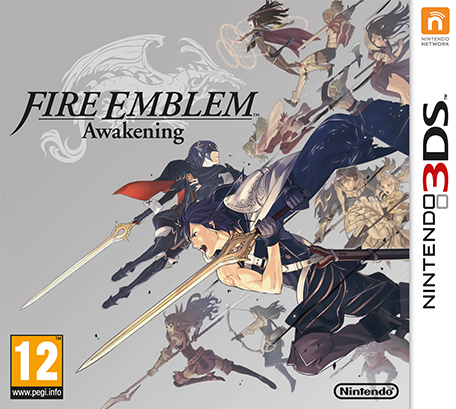
Fire Emblem: Awakening (3DS)

A hint of trepidation arises whenever the "Powers That Be" decide that "Your Cool Thing" needs a bigger audience, primarily because "What They Like" and "Why You Like It" don't always mesh. Take Fire Emblem, possibly the most hardcore of Nintendo's franchises — not "hardcore" in the nonsense term of it appealing primarily to a traditional gaming audience, but because it is by its very nature a beautifully unforgiving beast. Expanding the base tends to mean dulling its claws, and the risk is that it'll no longer sink them in as deep.


To love Fire Emblem is to feast up on the throne of Damocles, but not everyone wants to chow down with a sword over their brain. It's clear that Nintendo would like more people to actually pay money for Fire Emblem: Awakening, so some of the series' idiosyncrasies big and small are smoothed out or tweaked, including the option to switch off the whole eternal sleep thing — and without penalty at that. Doing so may fly in the face of what Fire Emblem fans love about Fire Emblem, but, after all, it's only an option, tucked away safely in the likely healthier Casual mode you can choose to ignore. Or jump straight into. Who are we to judge?

If concessions like that are what it takes to continue to see high-caliber games of this ilk then Nintendo can tweak away; Awakening may be the most accessible Fire Emblem to date but retains its hardcore strategic faculties for those who are already very happy with the franchise, thank-you-very-much, and adds a whole bunch of other modern-day niceties on top of it that anyone can get behind. Damocles can have his delicious cake - and eat it, too.
The events of Fire Emblem: Awakening are set years past that of any other Fire Emblem entry, keeping its legacy at a distance far enough to prevent new players from feeling lost but with enough insider nudges to satisfy series veterans. After creating your character - named Robin by default - they are woken in a field by a group of soldiers led by Price Chrom of Ylisse. Robin doesn't remember who they are or where they came from, but soon finds themselves joining Chrom's cause in the role of tactician, fighting for the future of the kingdom. While we can't say the overarching plot feels wholly unique - if we had a dollar for every time we've seen an amnesiac at the center of an RPG story, we'd be happily shacked up in the Bahamas by now - interest in Fire Emblem: Awakening's tale of heroism and bravery against seemingly impossible odds is propelled in its near-entirety by the relationships between the game's characters - all of which come with difficult-to-pronounce names. Stoic, heroic and witty to the end, each cast member - no matter how minor the role - has a strong presence and unique voice thanks to some really great writing.

Watching these personalities interact and build relationships is its own kind of reward off the battlefield, as are the gorgeous, fully voice-acted cut-scenes for key plot points, although this typically involves an awful lot of reading between skirmishes. Partial voice acting peppers the wealth of dialogue, where a character blurts something audible at the beginning of their lines, but this tends to be hit-or-miss affair as sometimes what a character says doesn't align directly with the on-screen text. Still, it's more interesting than just text and works often enough to grow on you. You can even switch the voice track to the original Japanese, if you're so inclined.
There is certainly enough time for Fire Emblem: Awakening to grow on you as the campaign is quite lengthy, easily breaching 25 hours on a straight-shot through — indulging in the dozens of optional missions and side-scraps can tick up that clock significantly, not to mention the free SpotPass and paid downloadable missions slated to hit from day one. That's a lot of strategizing, and in typical Fire Emblem fashion there is a great depth to fighting that never stops rewarding smart thinking or punishing lapses of judgment no matter how temporary. It can be frustrating to get knocked on your back at the end of a contentious fight, but then again, it was probably your fault anyway.

Each side takes turns moving their dozen or so units of assorted types around the map in a limited fashion, allowing one action per unit - move, attack, use an item and such. The battle mechanics build on a simple Rock-Paper-Scissors-type weapon triangle, and on top of that certain weapon types are more effective against assorted units. It sounds simple, but in practice requires a lot of careful consideration to maximize your turn - not only must you try to figure out the most powerful way to attack your opponent, but also ensure proper footing so you don't get anyone killed when your enemy takes their turn. Successful routings require surveying the terrain, arming with the proper equipment and thinking two steps ahead. The campaign loves to toy with your emotions, often pitting you against what seems like an insurmountable enemy only to throw in an empowering twist somewhere down the line - or a devastating one, if you're unlucky.
As units level up they grow stronger and more capable with their weapons, which in turn yields higher damages and resistances and allows the wielding of more powerful arms. You can change or upgrade a unit's class or abilities with items and Miyagi them to their true potential. Key to this entry are character relationships; while they are fun to watch unfold off the battlefield, how chummy everyone is together matters even more in the thick of it. The buddy system reigns supreme in Fire Emblem: Awakening: placing units next to each other in battle allows them to influence stats like hit, dodge and critical rates, jump in to protect from a blow or themselves swoop in with an extra strike. The more that the same units fight together, the stronger their relationship becomes, which can be crucial in determining whether they live or die.

At the outset of a campaign you can pick between Casual and Classic rules, and once selected you cannot switch. When playing in Casual mode, death isn't such a big deal: your units hit the sidelines for the rest of the battle but are happy to join in with the next fray. Without the fear of permanent loss this style of play allows for more reckless action, although suffering too many losses in one battle is a sure-fire way to not win. Classic is more demanding in this area as a dead unit is, as one might imagine in reality, really dead. A steady stream of new units prevents your roster from depleting too much, but losing a unit you've groomed and become attached to because of a poorly reasoned move is a good way to drive yourself crazy. There are none of Fire Emblem: Shadow Dragon's Save Points on the maps so in Classic mode there is no saving while in battle; you can bookmark a fight and resume it later, but if you want to avoid a death then you'll have to restart the chapter. Considering the stiff challenge of later portions of the game, restarting a map can become a frustratingly common occurrence - this is one of those games where your Activity Log and in-game timer will never align. In Casual mode you can save anywhere at any time, making deaths even less of a setback.
There are other tweaks to the mechanics that a newcomer might not notice but an old-timer will appreciate; legacy quirks have been ironed out by default to make for a smoother experience, like being able to approach an enemy unit before picking a weapon. Since there's already so much on your tactician's plate, anything to help make their life a little easier is very welcome, but grizzled veterans who hate change can switch off a bunch of settings to play the game they want.
Easy on the eyes for the most part, Awakening's presentation is a real step above prior portable outings but not quite up there with the past few home console entries. The aforementioned CG cut-scenes have some of the best art design that we've seen on the handheld so far, beautifully bringing the world to life with vivid anime detail. Half of the exposition makes use of illustrated talking head-style exchanges with slightly tweaked facial expressions — the art is lovely and effective for its purpose but comes off a little static somewhere around the halfway point. The 3D portions are somewhat less detailed and impressive but they too get the job done, lending some much-needed dynamism to battles even if it takes some focus to get past how none of the characters appear to have any feet. The maps don't generally look all that remarkable but fulfill their utilitarian purpose - were they any busier then they'd likely distract, after all, and the 2D sprites used relay information more clearly than a scaled-down polygonal model would on this screen. Plus they look neat and have a lot of personality, making it really easy to spot who is who out there.

Awakening's wonderfully smooth campaign is paired with a suite of multiplayer modes in both local and StreetPass flavors. Alongside an ally in the same room, Double Duel has each player choose three friendly units from their campaigns to march into battle against an AI army, taking turns to send in a hero and buddy unit. Defeat nets you nothing, nor do your units stay dead here, but as it isn't the same type of tactical combat as the rest of the game - more of a stat fight, really - there's little risk involved, and thus a less fulfilling reward. Double Duel victories yield Renown to unlock bonus items and grow a scary number next to your name for StreetPass battles, the far more interesting social mode where you select an army of 10 to send out into the ether to do battle with, recruit or buy wares from visiting platoons. StreetPass Sorties take the place of online multiplayer, which is kind of a bummer to have removed for those who never seem to find themselves around fellow 3DS owners.

Conclusion

Fire Emblem: Awakening's masterful tightrope walk between luring in curious onlookers and appealing to the hardest of cores is a sight to behold. It doesn't matter whether you've been strategizing with Marth since the NES days or only know him as the weird blue-haired guy from Super Smash Bros: Fire Emblem: Awakening's tale of heroism, colorful cast of characters and richly rewarding gameplay are sure to sink their talons in for a very long time. Who knows, with practice a beginner might even come around to the whole perma-death challenge thing. While the multiplayer options may be a little iffy depending on your circumstances, the sheer amount of quality content and replay value make this one icon sure to spend a long time on your 3DS menu. Have no fear: Fire Emblem: Awakening is here.

Review: Castlevania: Lords of Shadow - Mirror of Fate (3DS)

As much as it will pain Castlevania fans to admit, the series was in a pretty bad state prior to the release of Castlevania: Lords of Shadow in 2010. Although a string of "Metroidvania" entries — produced under the guidance of the enigmatic Koji "IGA" Igarashi — had hit the mark from a critical standpoint, less worthy instalments dragged the brand downwards (Castlevania Judgment, anyone?) and its commercial performance remained decidedly lackluster.

In order to keep pace with the latest action adventure experiences, fresh blood was required — and Madrid-based MercurySteam provided just that. Lords of Shadow may have annoyed purists raised on the likes of Dracula X: Rondo of Blood and Castlevania: Symphony of the Night, but it achieved its goal — at the time of writing it's the best-selling entry in the entire lineage, according to Konami. It has also spawned two sequels, one of which is currently in production and the other the subject of this review.

Castlevania: Lords of Shadow - Mirror of Fate takes place after the cataclysmic events of the original Lords of Shadow, and if you've not played that particular game yet and wish to avoid spoilers, we advise you stop reading now. Lords of Shadow protagonist Gabriel Belmont has become Dracula, and his son Trevor — whose existence he is unaware of at the time of his transformation — has been taken under the protection of the Brotherhood of Light as a baby. In time, Trevor has a son of his own — Simon — who is also separated from his parents at an early age and forced to fend for himself. The game puts you in the shoes of several different characters, but the main quest begins in earnest as Simon Belmont enters Dracula's castle to claim vengeance on the one who apparently killed his father many years ago.
It's impossible to elaborate too much on this epic, multi-generational storyline without ruining the game; suffice to say it is one of Mirror of Fate's strongest features. The developer has done an excellent job of re-purposing famous names from the Castlevania series and creating its own self-contained vision of the franchise. The same purists who baulked at Lords of Shadow's re-booting of the Castlevania origin story will no doubt be equally aggrieved at the liberties MercurySteam has taken here, but when detached from the rest of the bloodline, Mirror of Fate ironically has one of the best plots yet seen in a Castlevania title. It helps to have played the original Lords of Shadow, but it's by no means a prerequisite.

Despite the desire to tear up the Castlevania rule book and start all over again, the developer has maintained plenty of solid bonds with previous games, and these are sure to go some way to winning over life-long fans. Names such as Schneider, Gandolfi and Belnades — taken from Castlevania 64, Castlevania: Lament of Innocence and Castlevania III: Dracula's Curse respectively — are bandied about at several points, and monsters such as skeletons, mermen and flea-men all make an appearance, tangibly linking Mirror of Fate to past instalments.
At first glance, you'd be forgiven for assuming that Mirror of Fate also adheres to the tried-and-tested Metroidvania blueprint; the top display shows the 2.5D gameplay while the bottom is reserved for a map, as well as inventory management — just as it was in the DS titles Dawn of Sorrow, Portrait of Ruin and Order of Ecclesia. However, as was asserted by the game's producer prior to release, Mirror of Fate isn't exactly the same as these esteemed entries. The most obvious change — and the one that even caused us moments of doubt when we previewed the game last year — is the combat. Previous Castlevania titles were all about one-hit kills and dashing through environments quickly, but in Mirror of Fate there's a greater focus on combination attacks and special moves.

The combat engine is lifted almost wholesale from the original Lords of Shadow, and while it does slow down the platforming action a little, it actually adds considerable depth to proceedings. Most enemies take several hits to slay and many will block your blows before countering with an unstoppable offensive. Simply hammering the attack buttons won't do you any good here; you need to learn the various combo attacks, mix in mid-air juggles and unlock guard-shattering special moves in order to succeed.
Grapple moves come into play when your opponent is stunned, allowing you to end their pitiful life with a spectacular finishing move which causes the camera to zoom in for the best view. Experience points are awarded for victory in battle, and as your level increases so too do the number of attacks available to your character. Fighting common foes is engaging enough, but it's the boss battles which really open up Mirror of Fate. Each contest demands a varied range of tactics and it usually takes a few goes before you lock down the winning pattern. Thankfully, generous checkpointing means that failure is never a major irritation.

With combat taking centre stage, the emphasis on exploration is lessened significantly from previous entries in the franchise. While it's possible to backtrack through the castle and visit areas more than once, you're effectively funnelled down the correct path by red arrows on the map screen which show where you should be going. This removes the need to painstakingly cover every inch of Dracula's crumbling citadel in case you miss a secret exit or pathway, but it also speeds things up and prevents players from getting frustrated when they can't find how to proceed — a common issue with the traditional Metroidvania titles.
The limited variety of collectable items is another factor which curtails the need — and desire — to explore. Aside from picking up ammo for your secondary armament, reading scrolls left by fallen warriors and finding chests which expand your vitality, magical power and ammo stock, there's no real reason to investigate every nook and cranny. Enemies don't drop special items either, which means you don't have the "gotta catch 'em all" collectability element which made RPG-inspired Castlevania titles like Symphony of the Night and Portrait of Ruin so addictive. While this might come as a crushing disappointment to seasoned fans, it's actually quite a positive change in some ways; the action is more focused and straightforward, and the already impressive amount of play time available means you're not going to be stuck for entertainment, despite the toning down of RPG elements. Having said that, we did at several points find ourselves wishing there were more things to collect and secrets to uncover.

Visually, Mirror of Fate contains moments of sheer, unadulterated beauty. The 3D effect is astounding, and works especially well with the fixed 2D viewpoint. When navigating the highest points of the castle, you can see distant towers in perfect perspective, while closer objects remain slightly out of focus. 3D is used to good effect to add tension, such as monsters quickly dashing past the player's gaze in the foreground, unseen by the character you're controlling. There are points where the graphical fidelity drops slightly and the frame rate isn't as smooth as we'd like, but these are minor grievances when you consider the standard of the overall package. It's worth noting the quality of the cutscenes, which are rendered in real-time but use a cel-shaded style which we personally think is superior to that of the main in-game visuals. Even so, Mirror of Fate is a fine-looking 3DS title, and no mistake.
Special mention must also go to the music, which is nothing short of sublime. Óscar Araujo's score manages to be brooding, triumphant, emotional and chilling in equal measure, despite not revisiting any of the traditional fan-favourite Castlevania tracks. Araujo is clearly a composer of incredible talent, and while his work on the Lords of Shadow series may be vastly different to what fans are used to, his contribution here is just as significant as the work of Michiru Yamane and Masanori Adachi.

Conclusion

Although the 2D perspective and Metroidvania-style features call to mind past classics, Castlevania: Lords of Shadow - Mirror of Fate shouldn't be directly compared to previous games in Konami's long-running vampire-huntittle differently. While elements of exploration and item collection remain, they are drastically scaled back when compared to the likes of Symphony of the Night and Dawn of Sorrow — which could be a positive or a negative, depending on your personal taste. Instead, MercurySteam's vision of Castlevania is built around a deep combat engine which tries to make each and every enemy encounter a rewarding and challenging experience. Factor in some impressive visuals, gorgeous music and taxing boss battles — not to mention a fantastic story and more replay value than you might at first imagine — and you've got a game which can stand proud in the Castlevania bloodline. Sometimes, a little change is a good thing.
Partner: Web Game 360
Copyright © 2013. Great Old Games 360 - All Rights Reserved
Designed by Creating Website
Powered by mp3 Lanka