Newly-added Games
Showing posts with label RPG. Show all posts

Overlooked RPGs that are worth playing today

Great games that didn't get enough love.

Few genres have as rich and varied a history as the noble RPG. We love a good, long, talky adventure, preferably with a nice leveling system with a little bit of crafting, alchemy and, if we're especially lucky, a lovely cloth map. But not every RPG is born equal, and games deserving of recognition and success sometimes sink into obscurity. Perhaps they came out at the same time as a blockbuster competitor, perhaps they had flaws that put players off, or just looked ugly.
To compliment our list of the best RPGs ever (which some of these games are included in), we've collected a ragtag ensemble of our favorite tales that didn't get enough love. Some are old, some are new, but all are worth installing and enjoying today. If you have any recommendations you'd like to add, share away in the comments.

Alpha Protocol

Released: 2010 | Developer: Obsidian | Steam
For all its clunkiness, Alpha Protocol is the closest we might ever come to Mission Impossible: The RPG. It's Obsidian's take on the typical BioWare adventure, only with elves replaced with Russian mafia, set in a murky world of espionage, double-crossing, and quintuple-crossing. Although you can't choose your character (you can give him a magnificent beard), you will diverge the story in many fascinating, well-written and surprising ways.

King's Bounty: The Legend

Released: 2008 | Developer: Katauri Interactive | GOG, Steam
The Heroes of Might & Magic series was in a rut by the time The Legend came along. Out of nowhere, this belated King's Bounty sequel grabbed the tactical RPG genre by the scruff of the neck and took it somewhere fresh, bizarre and exciting. While it looks like a typical HoM&M-type game on the surface, The Legend's charming world features some of the craziest, most memorable quests you'll ever embark upon.

Risen

Released: 2009 | Developer: Piranha Bytes | GOG, Steam
The series lost its way a little after this first installment, doubling down on its previously fairly subtle pirate element, but the first Risen is still a compelling exploration RPG. It's Gothic without all the orcs, essentially, boasting an open tropical island where a humiliating bird-based death is usually only around the corner. Choose a faction, and pick your way through a hostile jungle teeming with enemies and secrets.

Arx Fatalis

Released: 2002 | Developer: Arkane Studios | GOG, Steam
Arkane's spiritual sequel to Ultima Underworld dialled down on the heroism and optimism, infusing the first-person dungeon crawl with a healthy dose of gloomy atmosphere and, appropriately, the arcane. It's an immersive RPG set in a shrivelled, sunless world, where civilization has retreated under the surface. Ultima has it beat on scale, but this is a worthy, if divergent follow-up. How about a sequel, Arkane?

Arcanum: Of Steamworks and Magick Obscura

Released: 2001 | Developer: Troika Games | GOG, Steam
How about that for a title? Arcanum was the debut game of Vampire: The Masquerade – Bloodlines creator Troika. The team was comprised of ex-Fallout devs, and so, unsurprisingly, Arcanum is a sort of Steampunk Fallout. It's about the struggle between magic and technology—a fantasy world in the midst of an industrial revolution. Much like Bloodlines, enjoyment of Arcanum is made easier with the help of mods and fan-made patches.

Neo Scavenger

Released: 2014 | Developer: Blue Bottle Games | GOG, Steam
A permadeath survival RPG with brutal turn-based combat. If you're not killed in a fight, you'll be killed by your wounds. And if they don't get you, a lack of clothing, shoes or food is sure to be a problem. Death isn't something to be feared, though. Each playthrough randomises parts of the map, so you're never sure what you'll find or where you'll find it. Add to that a large list of skills and you're guaranteed new rewards and dangers with each new inevitably doomed life.

Regalia: Of Men and Monarchs 

Released: 2017 | Developer: Pixelated Milk| GOG, Steam
Inheriting a kingdom sounds great, but Ascalia comes with a mountain of debt so high there's snow on top. To provide homes for its cute anime characters you go adventuring, because there's always money in wolf-murder. Dungeons in Regalia are whimsical choose-your-own-adventures where you meet zombies who don't know they're dead and people who are in love with elementals, broken up by grueling turn-based combat. While fights can be fussy and repetitive, you can knock down the difficulty or just hit the auto-win button when you get bored—and when you're in a boss fight or one where positioning matters because you're fighting in a field of fire or defending walls from samurai dwarves, you can knock the difficulty back up and get to work.
A kingdom's more than just money, though. To prove you deserve that inherited title you spend time with citizens and your new companions, ticking off the days on a calendar (that also contains looming debt-repayments) getting to know people in a warm and fuzzy friendship simulator. Regalia's a cosy RPG, the kind that has a fishing minigame and where the vampire's dark secret is that he'd really rather be a hairdresser.

LISA

Released: 2014 | Developer: Dingaling | Itch.io, Steam
This indie RPG is like playing the SNES classic Earthbound while having a bad mushroom trip. It retains the former's cooky charms but poisons all the kid-friendly stuff. In a bleak post-apocalyptic future where women don't exist, perverts have taken over. It's a bad place to be the surrogate father of a young girl, but our hero, Brad, has no choice. LISA is sometimes hilarious, sometimes gut-wrenchingly bleak, and always bizarre as hell. Its combat is too basic, and Brad's journey can sometimes feel too cruel—what with being able to permanently lose your limbs and party members—but LISA is an incredible homage with a morbid twist.

Recettear: An Item Shop's Tale

Released: 2010 | Developer: EasyGameStation | Steam
If you've ever wondered what life is like for the NPCs of a town, Recettear is for you. In it, you play as the owner of an item shop. You manage every aspect of the store, including haggling with heroes over the price of goods. It's not just management, though. Recettear lets you go off adventuring in search of rare stock—exploring randomised dungeons to liberate items from their previous owners.

Anachronox

Released: 2001 | Developer: Ion Storm | GOG, Steam
One of the quirkiest RPGs ever. Anachronox is a screwball sci-fi romp that spans six planets and stars some of the strangest party members in the genre. It wasn't considered pretty at launch, and time has been unkind to the chunky heroes, but that can't dull the wit and imagination of the universe all these years later. The turn-based JRPG-esque combat system isn't terrible either thanks to the wide array of odd alien gadgets that make up your armoury. Even if that's not to your taste, it's worth powering through to watch Boots and Stiletto fall from one madcap scenario to the next.

Toukiden 2  

Released: 2017 (2016 originally) | Developer: Koei Tecmo| Steam
Toukiden: Kiwami was a fine action game heavily inspired by Capcom's Monster Hunter series. Fun game, shame about the PC port. Happily, with Toukiden 2, developer Koei Tecmo delivered a fun, demon-dismembering action game and playable frame rates. The sequel retains the mythology-inspired monsters that distinguish Toukiden from games like Dauntless and Monster Hunter, and piles on a ton of new features and weapons that fill the gaps in the original. It's basically Oni Hunter, and it's stupid fun.

Cosmic Star Heroine

Released: 2017 | Developer: Zeboyd Games| GOG, Steam
By far the most ambitious RPG by Cthulhu Saves the World developer Zeboyd Games, Cosmic Star Heroine aims to mix Chrono Trigger's on-map battles and Phantasy Star's sci-fi vibe in a new indie concoction. It didn't get the attention it deserved when it released, but as usual Zeboyd cooked up a clever battle system that takes something from classic RPGs (like Chrono Trigger's team-up attacks) and channels it into something fast-paced and new. A JRPG that's not just nostalgic for the 16-bit days, but actively attempts to improve upon its inspirations.

The Legend of Heroes: Trails of Cold Steel

Released: 2017 (Originally 2013) | Developer: Nihon Falcom | GOG, Steam
Developer Nihon Falcom's Legend of Heroes games are slow burns, gradually adding depth and richness to fairly cliche JRPG setups over dozens of hours. Trails of Cold Steel tells a parallel story to the older Trails in the Sky, and its more recent arrival on PC makes it an easy starting point. You play as a student in the military academy of the Erebonian Empire, and the story balances student life with the political flux of a nation ready for war. Structurally, Cold Steel borrows from the console RPG series Persona's take on daily student life. This is definitely one to play if talking to every NPC and piecing together their small stories is your favorite part of a Japanese RPG.

Avernum: Escape From the Pit 

Released: 2011 | Developer: Spiderweb Software | GOG, Steam
Spiderweb Software's Avernum: Escape From the Pit is as old-school as it gets: Hand-drawn, text-heavy, vast, and dangerous. It also provides a remarkably open-ended experience that you don't often see in big-budget RPGs. Following your banishment to the underworld, you can opt to stay there and help forge a new society, make a break for freedom on the surface, or even try to get some payback from the cruel Emperor who threw you into the pit in the first place. It's a very niche and demanding sort of experience, but if you're willing to put in the effort, Escape From the Pit (and the five Avernum sequels that have so far followed) will pay off in spades.
We've launched the PC Gamer Club, a membership program that offers ad-free browsing on this site and a bunch of other benefits including a digital subscription to PC Gamer magazine, monthly game keys, access to our private Discord server and more. For all the info, visit club.pcgamer.com.

Fantasy Life

Fantasy Life, Level-5 and Brownie Brown's life sim and action RPG, is a game with a long and storied history. Originally announced in Japan for the Nintendo DS/DSi generation of consoles back in 2009, it spent three years in development, seeing a platform upgrade to the Nintendo 3DS, finally releasing in Japan-only on 27th December, 2012.
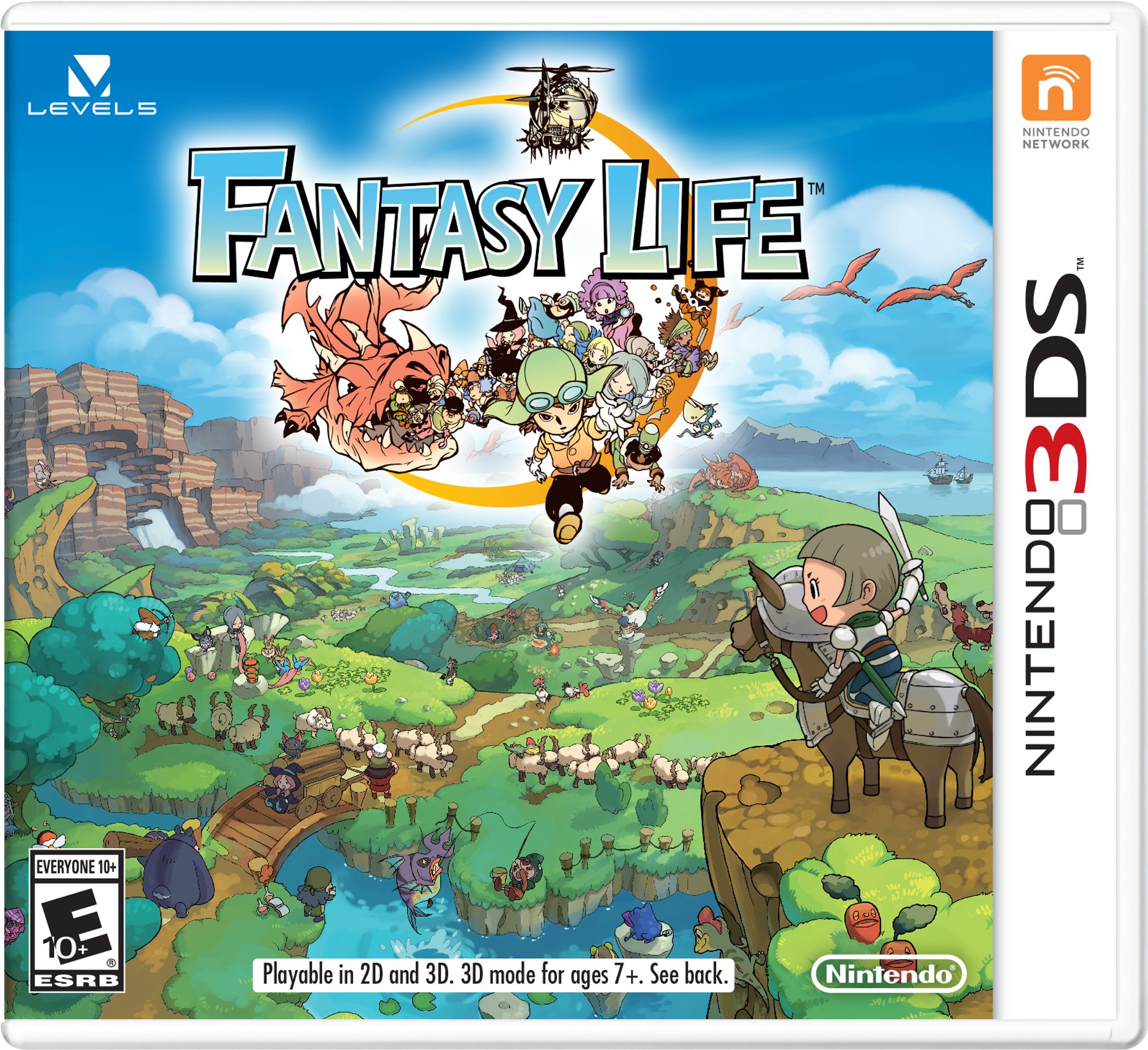
Fantasy Life was closely watched by the western gaming press as the companies and staff involved in its production reads like a who's who of Japanese games industry RPG notables. In addition to Level-5, legendary character artist Yoshitaka Amano and early Final Fantasy composer Nobuo Uematsu are also credited on Fantasy Life. Most notably, Fantasy Life is the final game developed by Brownie Brown — before a restructuring and name change to 1-UP Studios — a company that holds a special place in JRPG fans' hearts for, among other things, its involvement with Mother 3, a game that was never officially released in the West. Now that Fantasy Life is finally arriving on western shores, does it deliver on the promise of its formidable creative staff? Absolutely.

At first blush the action RPG elements of Fantasy Life seem almost par for the course — the medieval fantasy setting, a dragon threatening the land, a race of cuddly creatures called the Plushies who haven't yet grasped that their name doesn't form the basis of the Queen's English; but the game excels by expanding the scope of the adventurer's journey by integrating it with the game's life sim features. In addition to gaining XP and earning Dosh (the in-game currency) for littering the landscape with creature corpses, each Life has its own series of challenges which award stars.
When enough stars are earned, the player ranks up in the Life they are currently living and gains access to new skills or recipes that also mostly remain usable when a character switches Lives, with one exception. Special Skills, unusually powerful or useful techniques, can only be used as part of the character's current Life. While the game certainly supports focusing exclusively on picking up a sword and going to town on the local wildlife or just hanging around the city selling handmade furniture, the full experience of Fantasy Life lies in developing a well-rounded character that can craft his or her own armour and weapons, potions, stat-boosting foods, and more.

All of this may sound like you're building a personal mobile weapons platform that can knit its own ammunition during recoil phases, but the game's difficulty is handled surprisingly well. You won't find yourself switching Lives and single-shot killing everything in sight, and the monsters of new kingdoms feel appropriately challenging once the areas become available. Combat is centred around using special button presses to execute certain moves, requiring a bit of timing to master but certainly not especially difficult, even to action RPG newcomers.
Fantasy Life isn't a game of statistics, gear dependence, and power grubbing, and this is evident in its somewhat eccentric user interface. While the screens are beautifully laid out and clean, this forces some useful information off of the top-level screens. It takes a few button presses to check out an item's statistics, and while shopping there's no immediately visible comparison between currently equipped gear and the selected item in the shop, again taking a few button presses to access. Fantasy Life is obviously not a title for people in a hurry.

Several of Fantasy Life's Lives involve producing goods, such as armour, clothing, and furniture by means of a short minigame. The crafting process is straightforward, requiring changing your character's position at the workbench and then performing the related task at that station in time with the indicator using the A button, and activating special skills once available. The difficulty is noticeable but not punishingly so — it's possible to miss a few taps or launch your character to the wrong place at the workbench and still make the item in the allotted time. Should you fail, your crafting materials will not be consumed, leaving you free to try again with no penalty; another example of design generous to less experienced players.
In addition to XP for character level gains and and stars for Life ranks, there's a third system, called Bliss, that awards points for other life sim related tasks like exploration, making in-game allies and decorating or buying new homes. As you increase your Bliss, you are awarded things like bigger bags, the ability to utilize mounts from different kingdoms and enhanced shopping experiences. Bliss is administered by Flutter, a talking butterfly that becomes your constant companion and neck piece early on in the game.

Fantasy Life's art is superb, with a beautifully colourful palette and cartoony, stylised graphics that are just unrealistic enough to avoid looking ridiculous; the 3D effect works consistently and adds even more richness to the already pleasing graphics. Unfortunately, it does suffer from some minor visual issues. The perspective, which is midway between a top-down and a side view — combined with the relatively low resolution of the 3DS — means that details get somewhat crunched to fit the available pixels or lost entirely, an issue which mostly affects in-game characters — the environment art is consistently fantastic. There was some obvious slowdown in the main cities at times, but this didn't occur frequently enough to be a major concern while playing. If you're looking for pure graphical heft Fantasy Life won't satisfy, but the art definitely supports and enhances the game world's presentation.
Brownie Brown has created a game world suitable for all ages, but mature enough in its presentation that it won't turn off the legal-to-drive crowd. The game's main story addresses themes of acceptance and cooperation in a way that any pro-social parent would be proud to hector their children with. The in-game cinematics that advance the main story, of which there are sadly few, are every bit as delightful as what we've already seen in the game's many trailers, and the 3D effect makes them feel that much more vivid. The music also supports Fantasy Life's light-hearted and humorous tone, but it's not all kazoos and glockenspiels — the bell and violin theme that plays in Castele's city at night is simply and gorgeously haunting.

It should also be noted, though its level of attraction will vary, that this isn't an exclusively single-player adventure. Fantasy Life's multiplayer allows players to get together locally or online in groups of up to three and accomplish the same tasks and challenges as in single-player mode (although it is not possible to advance the main story in multiplayer). With the variety of Lives to live and the range of tasks to perform, any trip to any kingdom with just about anyone is sure to be productive in some way — and you might just get the right help to finally defeat that challenge monster that's spent far too long in your Life list.
Link mode also allows you to send your online friends messages (both group-wide and private), notifications and applause without actually playing together. The onscreen keyboard is alphabetical and not QWERTY, so expect a learning curve when trying to stylus- or fingernail-tap out a message. Using StreetPass, tagged players' Fantasy Life avatars can appear as residents in your main town of Castele; speak with them enough to become friends and eventually they may reward you with gifts. These are welcome touches that will add a great deal to the experience for some, or at the very least offer a fun diversion.

Conclusion

Given the game's relative age, Fantasy Life isn't going to be the shiniest toy on the 3DS' shelf this year, but it just may be the happiest. Providing quality gameplay in both its life sim and action RPG aspects, served up with all of the colourful wit and charm anyone could ask for, it serves as a jewel in the crown of memory of a games studio that helped create some of the most memorable role-playing video games that ever graced the medium. It may now be 1-UP Studios, but Brownie Brown hit its marks with Level 5 in this game. As a farewell for the company in its old guise this is an excellent game for the occasion. So long Brownie Brown, and thanks for all the fun.

Suikoden 2 review: The greatest RPG ever made

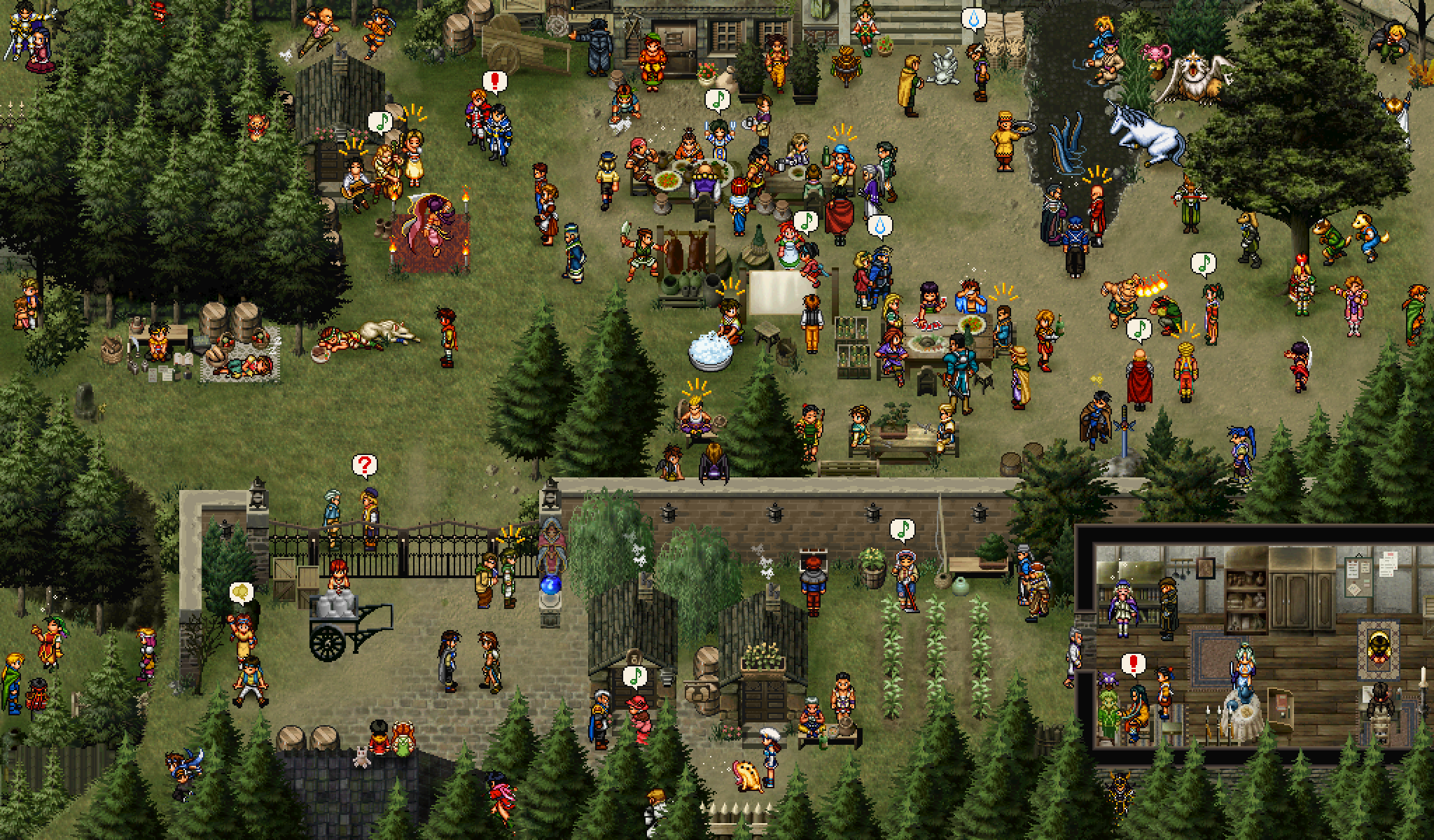
Suikoden 2 is the greatest RPG ever made. 

If you have not played the first Suikoden then please check out the review for it here due to the similarities between the two games. A lot of what is said in that review about the gameplay basics can be carried over to here. It should also be mentioned again that as a PlayStation One classic, there is nothing new or changed to the game. It is a strict port of the PS1 original.

You take over the role of a young teenager named Riou, and along with his best friend Jowy, are caught up in a plot to create a new war between the Highland Empire and the City-States of Jowston. Rising from refugee to leader of the rebel forces against the Highland Empire, the player is caught up in political intrigue, friendship, and betrayal. The story is a lot darker and serious. While the first game made the motives of the hero easier to digest, Suikoden 2 puts the world in a layer of grey, making morality not as clear cut a choice. This is helped by there being multiple endings throughout the game.
As discussed in the Suikoden 1 review, that human tragedy element is an even bigger focus in Suikoden 2 because of the obfuscation of morality. Playing through the game, I had mixed emotions over events that happened because it takes you through a different path through the valley of death and human nature. The first game, overall, gives you a clear-cut choice of you're fighting the good fight against something evil. While Prince Luca Blight is one of the most extreme, sadistic villains in any RPG, events that transpire make you question who is right, and who is wrong in the conflict. So for the gamer who wants to think deep about what is presented to him, you're given lots of philosophical material to work with. At the same time, you still have a tale of good vs. evil that flows off the TV screen for gamers wanting to just read and enjoy the surface.

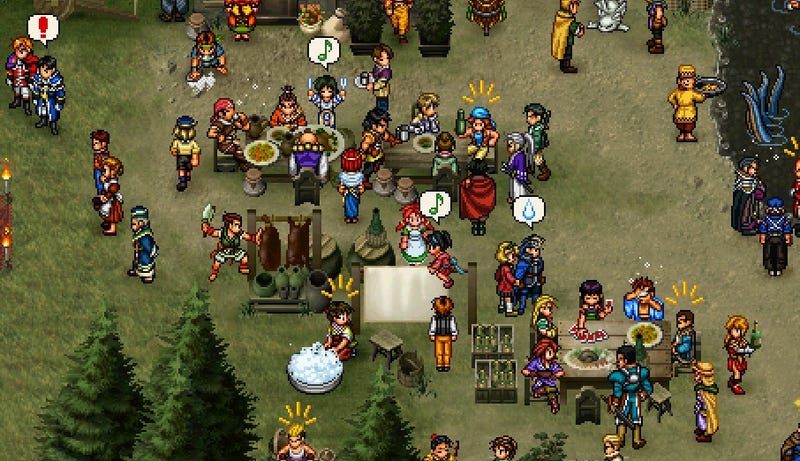
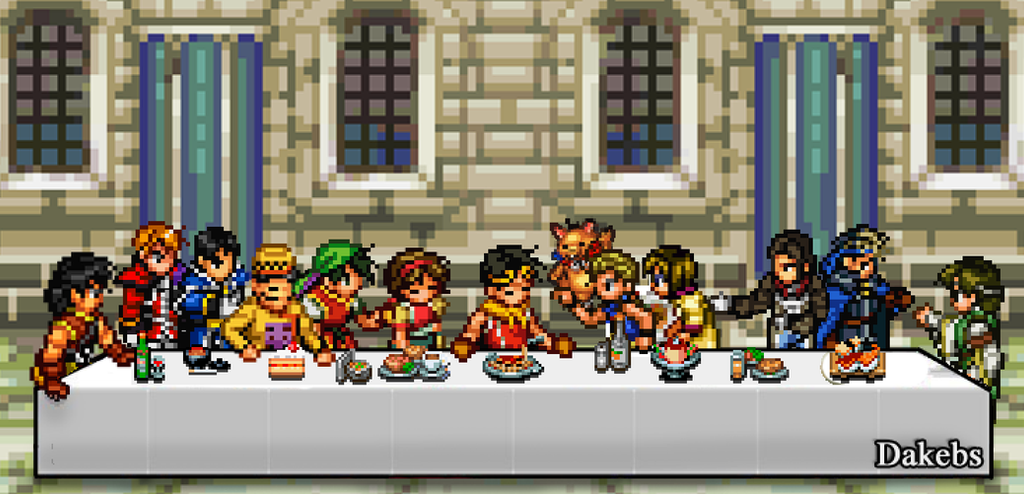
Konami also improved the amount of purpose and storyline integration of the 108 Stars of Destiny. A good amount have a role to play in progressing the narrative before, and after, joining the cast. There are still characters with little interaction outside of clicking circle, they say they are an aspiring merchant, and you offer to recruit them. This is offset by Richmond, the private detective, who can research the backstory of all of the 108 characters. Some RPGs have a hard enough time weaving together a dozen characters, let alone a cast that rivaled Dynasty Warriors before Dynasty Warriors even existed.
While this is a sequel, any knowledge of the first game only helps the player with their appreciation of the world, and understating some background material, especially with some of the returning characters. If you did not play the first you lose nothing in terms of the story though. Save data from the first game can be transferred over to give the player added benefits, like certain cameos I won't mention due to spoilers.

One change was made to the equipment system which will be a bother to people depending on the style they enjoy. Instead of having an inventory the character can just use items from; all items need to be equipped. The catch is it takes away a slot for a piece of miscellaneous equipment. You can either go all equipment, which is what I do, all items or a mixture. I can understand why they did it that way, as the magic item system could be greatly abused as it allows non-magically skilled character access to powerful spells.
The combat system is almost unchanged from the first game. Unite attacks are still around, and so is the 6-man team. The one small addition is sometimes characters will perform double or triple attacks, meaning they will attack more than one enemy even though it is a basic attack. Duels have also returned, and are just as fun.

The strategy combat system has changed. Not every one of the 108 stars is included. Instead it has become a mini-version of a tactics style game. Certain characters are leaders which give you a new unit on the field. This is pre-determined and cannot be changed. But the others will give that unit bonuses, like extra attack or defense, or a powerful ability.
Suikoden 2 is twice the length of Suikoden 1, for those looking for the most bang for your buck. The amount of extras they added into the game help improves it over the original. One in particular is the Iron Chef mini-game which has its own unique storyline, and gives the player a reason to go collecting all the recipes around the world. There are other secondary storylines that help enrich the world that can be found if searched for carefully enough.

Suikoden 2 takes the foundation provided from Suikoden 1 and improves it. The foundation did not have any cracks, much like the lauded movies I used in the opening; it merely needed a couple tweaks. Those adjustments have created the best RPG ever made, in this writer's opinion. Everything it does is done without fault, and can appeal to any kind of fan of the genre from the casual to the most hardcore. There is something in it for everyone. Above all else, RPGs are made or broken by their story, and this has a story that will keep you coming back again and again. Even if you disagree it is the greatest, it is still one of the best RPGs from the PS1 era and well worth your time and money to pick up if you missed it back then.

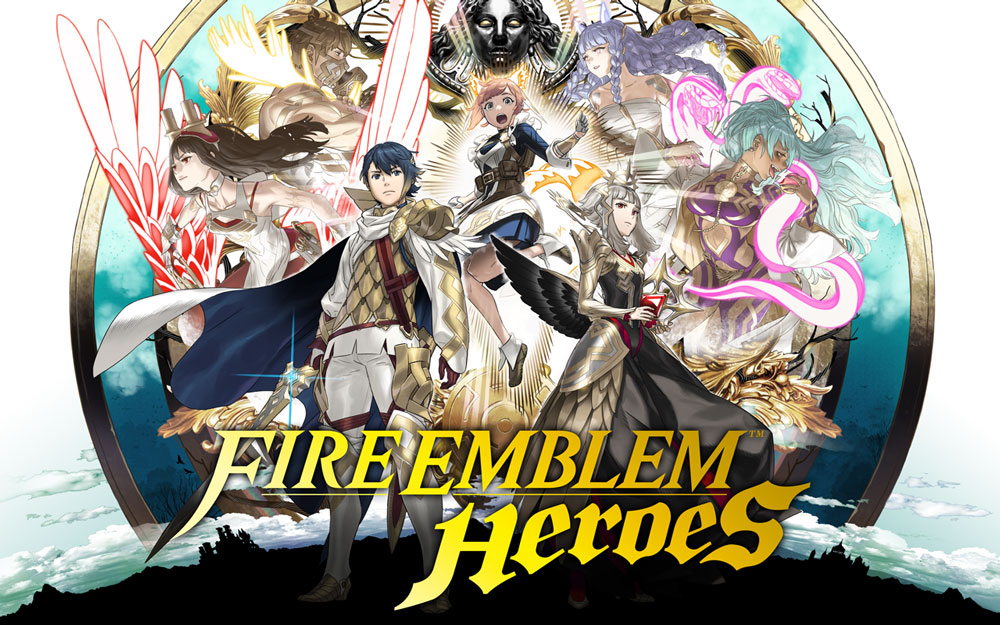
Fire Emblem Heroes

Fire Emblem Heroes, as an idea, doesn't seem to match Nintendo's efforts in the mobile space so far.
Pokémon Go removed much of the base series' depth for location-based social activity. Super Mario Run relegated the sophistication of Mario platforming to button taps. Fire Emblem as a series is resistant to that kind of reduction. The strategy role-playing game series is all about lengthy battles, challenging maps and memorable characters whose stories play out over several chapters.
Yet with Fire Emblem Heroes, Nintendo seems to finally have perfected translating the console experience to smartphones. Heroes is an excellent example of how to make an RPG work on smartphones, optimized for the platform without sacrificing the most important and appealing parts of the genre.

Fire Emblem Heroes is optimized for mobile without making too many sacrifices
Fire Emblem Heroes manages to do this by turning the franchise's wide-ranging cast into its biggest gimmick. A story mode has the unseen player character command a team of up to four units traverse the various worlds of Fire Emblem. Each one is based on a different game in the series, from 1990's Shadow Dragon and the Blade of Light to last year's Fire Emblem Fates.
Hopping around from setting to setting involves some nonsensical bits of explanation, but it was a treat seeing dozens of familiar faces team up and take on my own carefully constructed group of fighters. It's not just the characters that are recognizable, though. Nintendo and Intelligent Systems also preserved the series' battle system and core mechanics for Heroes. Memorizing the weapon triangle — swords beat axes, axes beat lances, lances beat swords — is still required for making it out of those turn-based battles with all units still intact.
The battle system may not be as complex as it is on consoles, but it's not watered down. It remains nuanced enough for me to get lost in, having played several Fire Emblem games in the past. At the same time, removing some of the more intense elements — like permadeath and weapon durability — also makes Fire Emblem Heroes accessible and appealing to newcomers. Map design, on the other hand, is lacking in comparison to the main series, but limiting the number of fighters that can enter into battle helps to provide a new kind of strategizing in place of traps and danger zones usually found on maps.
Most importantly, the battle system highlights the diversity of Fire Emblem's characters. That rings true in all of Fire Emblem Heroes' modes, which are varied and bountiful. After racing through the story, I've spent time sharpening my favorite fighters' skills in the Arena mode, which pits your team against those of other players worldwide to rack up chain bonuses and rewards; the Training Tower, where you can collect items and experience and level up new recruits; and the recently introduced Paralogues, which are like story mode side quests that rotate out on a recurring basis.
All of these modes give the characters room to shine and endear themselves to players, which is evident in the gorgeous character art and self-deprecating level up dialogue each one has. With modes like Paralogues, I got to meet and fall in love with new characters beyond my pre-existing favorites, which isn't just fun for me, it feeds directly into the free-to-play element.
For all of its traditional Fire Emblem conceits, Heroes is still a mobile game with some very recognizable mobile game constraints. All of those characters that I found so endearing in the story chapters? You can't just add them to your party. It costs in-game currency to collect them — it's called Orbs — and that comes at a cost.
Thus far, I've found it easy to play Fire Emblem Heroes without spending a dime. The game hands out Orbs left and right. The trade-off? I have very few of my favorite characters (and anyone who's finished up the entire Story mode will find themselves stuck without a free way to generate more funds).
Fire Emblem Heroes introduces a feature called Summon to build your party. Summon appropriates the Japanese phenomenon of "gachapon," wherein players spend money for a random grab bag of characters. Fire Emblem Heroes lets players spend upward of 20 Orbs at a time for five characters. There are a ton of character variables involved, from which hero you get to their stats.
the barriers to building the best team can be frustrating
As a Fire Emblem fan with some major allegiances, this can be a crapshoot. The probability that I'll get the highest quality version of my favorite characters is extremely low, which means I've amassed a good deal of new characters that I've never seen before and who aren't great in battle. While Fire Emblem Heroes has some wonderful writing and I've come to love some new faces, the barriers to building the best team can be frustrating.
More annoying is the other big free-to-play limitation: energy costs. Every single action I took in Fire Emblem Heroes requires the use of stamina, which dwindles rapidly and takes eons to replenish. There's no way to increase the stamina limit beyond its 50 cap, and when a battle — win or lose — costs upward of 15 stamina points, that means I'm left waiting for hours to play Fire Emblem Heroes again after only playing for five minutes.
I want to play Fire Emblem Heroes as much as possible, which is a testament to its battle system and characters. Whenever I've amassed enough free Orbs and summoned a hero I actually do want to add to my team, I want to use them in battle immediately and often. The stamina costs interrupt what would otherwise be an endless gameplay session, and it's impossible to do anything about this without spending cash.

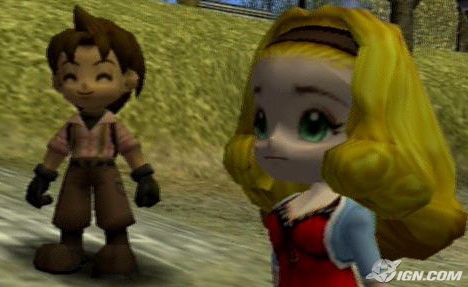
Harvest Moon: Another Wonderful Life: Special Edition - IGN

The Harvest Moon series attracts a very specific type of gamer. Like SimCity and the Sims, Harvest Moon takes a bunch of everyday (read: mundane) chores and whips them into a compelling game experience. In Harvest Moon, the objective is to raise a family and run a farm. Both objectives require you to perform a string of tasks, ranging from milking cows and feeding chickens to playing with your kids. Obviously, this kind of thing doesn't appeal to everyone.

The release of Harvest Moon: Another Wonderful Life, which shipped last year for the Nintendo GameCube, didn't change the formula. To those who loved the series, Another Wonderful Life remained quirky and undeniably charming. That's the way it has always been in the Harvest Moon universe. With Harvest Moon: A Wonderful Life: Special Edition, you'll notice a few changes here and there, but primarily it's the same deal. That is to say, it's identical in terms of game mechanics, but you will notice a few dips, especially in terms of visuals and framerate. Not only that, the load times are pretty long. The game even loads considerably when opening and closing the village map. Simply should not happen.
If you've played A Wonderful Life, or the GameCube version of Another Wonderful Life, this PS2 iteration simply doesn't hold much appeal. Technically, the two games are virtually identical. Yes, you do get a broader selection of brides (four in all), but the effects on gameplay are minimal at best. Running the farm and raising a family still form the bulk of the game, with all the chores from A Wonderful Life remaining largely unchanged. Balancing finances, animals, plants and kids remains the key to success. As such, if you liked Harvest Moon and haven't played the Cube version, then Another Wonderful Life: Special Edition serves up a mean dish of, well, farm life.
The game starts with your arrival in Forget-Me-Not-Valley. The first thing you do is tour your new farm. Your guide on the tour, a crabby farm hand by the name of Takakura, gives you the skinny on just about everything, from the local townsfolk to running the farm to purchasing animals from local merchants. After the not-so-brief introduction, Takakura leaves you alone to fend for yourself. Life in, err, Another Wonderful Life splits between a number of chapters, each with its own set of requirements. The first chapter ends when you get married to a lass from town, for example. Having said that, you can spend 100 hours on the first chapter if all you want to do is milk cows.
Before getting hitched (to one of four brides, this time), it's best to learn how to farm. Like previous Harvest Moon games, you receive an initial batch of seeds and equipment, plus a single cow. Success in Harvest Moon depends largely on how well you manage your first cow, as well as your first batch of seeds. Since this is essentially the same game as A Wonderful Life, performing tasks around the farm feels just as fun as before. Planting seeds and watering plants is just as strangely addicting as before, as is taking care of and milking cows.
Of course, there's a lot more to do than raise chickens, milk cows and sow plants. You can also purchase sheep to sell their wool. Raising sheep brings its own set of complications, however. If you want the best wool, you need to bathe the sheep. Plus, you can't sell wool nearly as fast as you can sell milk, but sheep also require less of your attention. It's a decent trade-off. Furthermore, the more animals you have on the farm, the harder it becomes to feed them, wash them, take them outside when weather permits and also sticking them in the barn when it's rainy. Beyond this, you still need to cuddle them and talk to them to make sure they're happy. And as everyone knows, happy cows produce excellent milk.
Fishing and cooking represent major pastimes in the game as well. After purchasing a fishing rod from Van, a roaming merchant, you can set off fishing to make dishes or to sell on the market. Like most aspects of the game, fishing can be as simple or as complex as you want. You can fish only once in the game if you want, for example, or spend hours at a time searching for one specific class of fish. The same goes for cooking dishes. You can simply cook with whatever ingredients you have or you can spend whole days searching for that single, elusive ingredient.
Just as in real life, you'll find there isn't enough time in the day to do everything you want to do. In addition to raising livestock and tending to plants for cash, Forgot-Me-Not-Valley features a cast of oddball characters and locations to explore. Interestingly, you can now choose the gender of your child and guide them through a mini-career path. It's not as complex as it could be, but it does add a little something to the mix. Fans will appreciate it, anyway.
The Verdict
Harvest Moon: Another Wonderful Life - Special Edition feels very much like the original Cube version. And that&#Array;s because both titles share almost everything. They sound the same and play the same. The differences, including an increase in brides, choosing the gender of your child and the ability to play forever, make little difference. What does make a difference, though, is the drastic drop in framerate, increase in load times and muddy graphics. 

Inazuma Eleven GO: Light & Shadow (3DS)


In Japan, Level-5 is one of the masters at maximising franchises through games — typically on portable systems — and TV shows or films, continually keeping the storyline going and producing regular content. Yo-kai Watch is the current craze, while Professor Layton had some film content to accompany six main-series games and more spin-offs besides; then there's Inazuma Eleven, one of the company's most prolific franchises. Its route to the West has been long, however, with heavily delayed localisation and a Europe focus holding it back — North America only recently received a revamped 3DS version of the DS original.
It's a series with impressive lore, nevertheless, and Inazuma Eleven GO: Light & Shadow are the first entries (two titles largely the same, Pokémon-style) outside of Japan to bring the major side-series to Western attention — in Europe initially, once again. Right off the bat we'll say this: if you're a devotee of the first three main titles across DS and 3DS, this is a fun extension that should join your collection. For those coming in fresh, a lot of the nods, winks and background story may be a little baffling, albeit not enough to spoil the experience.
The storyline takes place — we think we've got this right — 10 years after the conclusion of Inazuma Eleven 3, and this time around you're controlling Arion Sherwind, who comes with the same DNA of over-the-top super-enthusiasm as the main protagonist of this title's predecessors, Mark Evans. He's just starting out at Raimon, the setting of the first DS title and recurring home of Evans, and joins the school team and a host of new characters. Initially we struggled to warm to Arion and his team-mates as much as those that came before, but the title does a good job of using its story-telling to flesh these players out; eventually we did have some level of affinity with these young footballers.
There are a host of returning characters, though, which we won't spoil here, which as mentioned above could fly over the heads of those jumping in for the first time. There's a bit of clunky reminiscence to remind you of what's come before, but overall the ensemble cast is introduced and expanded relatively skilfully. As for the overall storyline, it's got a neat hook and progresses nicely, though it does have padding that feels unnecessary; in fact, the amount of slightly inane busy-work that's thrown in on occasion is a regular complaint following on from Inazuma Eleven 3 — the development team wants this to be a substantial undertaking, but throws in unnecessary filler to achieve that goal.
This GO entry, meanwhile, scales back some of the daunting depth that spiralled out of control in the original trilogy, though perhaps chops away too much. The first title hit a sweet spot that this entry misses, as despite having equipment, abilities and levelling to tackle, it feels less substantial. Random 5-a-side football battles are exceptionally rare now, as you're instead simply shown challengers on the map that you can take on or completely ignore — it's welcome, compared to over-zealous equivalents that came before, but we found that the world felt less vibrant as a result. There are plenty of NPCs to exchange meaningless phrases with, yes, but for many hours we were running around the same dozen or so small-ish areas over and over again; this is a title setting the foundations for the whole GO series, yet it falls short of being compelling in its storytelling and sense of progress.

That said, there are new features and an attention to detail to admire. Though the overworld is more barren than before and items feel less relevant than ever, there's real depth to the action. The Extra Competition Route for additional matches returns — despite being annoyingly restrictive early on — but there are new ideas such as Twitter-style network where characters chat over events, and a neat trading card mechanic for acquiring new players. As with previous entries you can certainly get by with the default line-up and extras picked up in battles, but there's daunting scope to expand your roster, while local Wi-Fi trading is great for making deals with friends.
The primary feature of this title — beyond exploring the over-world and picking some local battles — is the story 'event' matches, which are 11-a-side and full of drama. It's in these where the now-standard wacky special moves come to the fore, and some scripting is combined with increasingly tough matches — we even had to endure a penalty shoot-out on one occasion. These are essential to the plot and progress well, gradually unveiling more abilities and evolving characters, all once again — as with the 5-a-side battles — controlled with the stylus on the touch screen, though conversations and special moves show on the top screen. It functions as before with a combination of taps and swipes, though this entry throws in some new mechanics; most notable are Fighting Spirits, which have their own energy requirements and involve rather large spirits beefing up key characters and, on occasion, clashing with each other.

It's to Level-5's credit that these matches remain a highlight, especially with some added drama thrown in with key events that disable the clock — you're tasked with getting a specific character into a certain area of the pitch, for example. Managing points and energy for special moves, Fighting Spirits, special team moves and general stamina may sound complex and exhausting, but it's introduced steadily and impeccably structured; young gamers that can handle Pokémon should find it a breeze. With each chapter structured in multiple parts that conclude with a match, on occasion we found ourselves keen to get past the fluff of storyline and fetching brown bread for the coach — yes, really! — and into the matches.
What these matches and the title as a whole also show off is a genuine improvement in presentation, too. While previous efforts on 3DS — two iterations of Inazuma Eleven 3 — were a little lazy, this sports a new visual engine that's clearly based on the same technology used for the more recent Professor Layton titles. The style brings us clean, simple polygons that look particularly good in 3D, while the music is of higher quality than before. This was the first title in the series developed from the ground up for 3DS, and it succeeds in moving the franchise on in terms of its presentation. There's download content — as well as StreetPass and SpotPass functionality — so keen players have plenty to enjoy.

Overall, this is a thoroughly decent entry in the Inazuma series, with its GO moniker introducing some new elements and a young cast to join old favourites. That said, the core experience remains largely the same, and we feel that the RPG sweet-spot of the first title hasn't been hit here — it's less ponderous that the last of the original trilogy, but somewhat empty and smaller in scale, too. Despite that, it retains the franchise charm, enthusiasm and positive attitude, while providing a meaty adventure to keep gamers busy for a lot of hours.

Conclusion

Inazuma Eleven GO: Light & Shadow is another welcome entry in the series, notable for finally embracing the 3DS fully as opposed to updating DS content. It adds a smattering of new features and ideas, some of which enhance the play, though retains the same formula of overworld exploration and stylus-based matches — all of which should satisfy long terms fans. The world is a little less vibrant than the original classic yet retains charm, and this is a good jumping-in point for 3DS owners that are willing to overlook nods and winks to series lore. A solid début for the GO sub-series, if not a stand-out, it scores a narrow, extra time win in its quest to maintain the standards that fans of outrageous football have come to expect. Well played, Level-5.
Partner: Web Game 360
Copyright © 2013. Great Old Games 360 - All Rights Reserved
Designed by Creating Website
Powered by mp3 Lanka